On the morning of September 24, at a press conference held by the State Council Information Office, People's Bank of China Governor Pan Gongsheng, National Financial Regulatory Administration Commissioner Li Yunze, and China Securities Regulatory Commission Chairman Wu Qing jointly introduced measures to support high-quality economic development and answered questions. A series of policies to further stimulate China's economy and support capital market development were announced, which can be divided into three parts.
Liquidity Injection
Governor Pan stated that the central bank would lower its policy rate—the 7-day reverse repo rate—by 20 basis points, from 1.7% to 1.5%, while guiding the loan prime rate (LPR) and deposit rates down in tandem to maintain commercial banks' net interest margin stability.
Pan said that under the market-based interest rate adjustment mechanism, changes in the policy rate will drive adjustments in various market benchmark rates. It is expected that after this policy rate adjustment, the medium-term lending facility (MLF) rate will drop by about 30 basis points, and the LPR and deposit rates will likely fall by 20 to 25 basis points.
Corresponding to yesterday's remarks, on September 25, the PBOC announced that to maintain reasonable and ample liquidity in the banking system, it conducted a 300 billion yuan MLF operation with a 1-year tenor, a maximum bid rate of 2.30%, a minimum bid rate of 1.90%, and a winning rate of 2.00%, down 30 basis points from the previous rate. After the operation, the outstanding MLF balance stood at 6.878 trillion yuan.
On September 25, banks announced that to maintain reasonable and ample liquidity in the banking system at the end of the quarter, the PBOC conducted 196.5 billion yuan of reverse repo operations via fixed-rate quantity bidding on September 25, 2024.
In open market operations conducted on September 23, the 14-day reverse repo rate was cut by 10 basis points
Real Estate
The existing mortgage rate will be lowered by approximately 50 basis points, benefiting about 50 million households and reducing annual interest expenses for 150 million people by roughly 150 billion yuan. The central bank also unified the minimum down payment ratio for commercial personal housing loans nationwide at 15%, reducing the second-home down payment from 25% to 15%.
The deadlines for two real estate financial policy documents were extended to the end of 2026; the central bank optimized the affordable housing relending policy, raising its funding share to 100%; it will support the acquisition of existing land by developers and study allowing banks to support enterprises' market-based acquisition of developers' land, revitalizing existing land and easing developers' funding pressure.
Support for the Stock Market
The creation of a securities, fund, and insurance company swap facility is a structural monetary policy tool recently introduced by the PBOC to support the stable development of the capital market. This facility allows eligible securities, fund, and insurance companies to use their own bonds, stock ETFs, CSI 300 constituents, and other assets as collateral to exchange for high-liquidity assets such as government bonds and central bank bills from the central bank. Through this mechanism, relevant financial institutions can enhance their ability to obtain funds and increase stock holdings, thereby boosting investment in the stock market. The initial scale of the swap facility is 500 billion yuan, with the possibility of expansion based on market conditions. Governor Pan said that if the tool works well, there may be more similar operations in the future, potentially reaching a second or third 500 billion yuan tranche. Importantly, funds obtained through this tool can only be used to invest in the stock market. The implementation of this policy not only injects liquidity into the capital market and boosts investor confidence but also promotes market stability and healthy development. For securities, fund, and insurance companies, the swap facility provides a new source of funding, enabling them to operate more actively in the capital market. This is also the first time the PBOC has innovated a structural monetary policy tool to support the capital market. Additionally, alongside the swap facility, a special relending for stock buybacks and shareholding increases was introduced. This tool aims to create a relending facility for stock buybacks and increases, guiding commercial banks to provide loans to listed companies and major shareholders for repurchasing or increasing holdings of listed company stocks. The PBOC will provide relending to commercial banks with a funding support ratio of 1.75% for the relending rate, and commercial banks will add 0.5 percentage points when lending to clients, resulting in a rate of 2.25%. The initial tranche is 300 billion yuan, and the governor indicated that if the work is done well, subsequent additions can be made. The introduction of these two tools is expected to provide stable new funding support for the stock market, help market participants revitalize existing assets, and promote the rediscovery of listed companies' value.
On September 26, the Politburo held a meeting to analyze and study the current economic situation and deploy next steps. The September Politburo meeting was unconventional, as such meetings are typically held at fixed times throughout the year. This unscheduled meeting exceeded expectations, and the key points discussed were extremely important. We must strive to boost the capital market, vigorously guide medium- and long-term funds into the market, and unblock bottlenecks for funds such as social security, insurance, and wealth management to enter the market. We must support listed companies' mergers and acquisitions, steadily advance mutual fund reforms, and study the introduction of policies to protect small and medium investors. We must introduce a law to promote the private economy and create a favorable environment for the development of non-public ownership. Emphasis was placed on 'promoting the stabilization and recovery of the real estate market.'
This Politburo meeting differs from the three-department press conference; it is a general guiding meeting aimed at clearing obstacles for achieving the above goals, while the three-department press conference emphasized providing substantive assistance. It can be anticipated that with this directional guidance, policy surprises will continue to occur. Coupled with the Fed's rate cut, the intensity of this round of policies will be unleashed, and policies will continue to be strengthened.
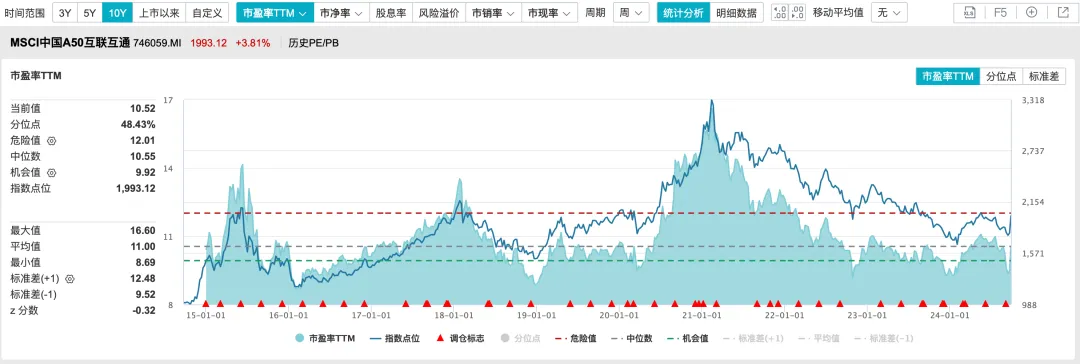
Rebound or Reversal? The several strong measures introduced this time are undoubtedly a shot in the arm for the capital market. All A-share indices surged, and Hong Kong stocks and US-listed Chinese stocks also rallied strongly. It is foreseeable that this will also provide a strong stimulus to the economy. So, as capital market investors, how do we judge whether this is a speculative rally driven by policy additions or a complete reversal of investment logic, presenting an opportunity for long-term heavy allocation to stocks? The factors driving the stock market rally are roughly as follows: valuations are low enough
The economy substantially improves A large amount of long-term funds enters the stock market In recent days, A-share trading volume has clearly increased, indicating active trading, with a large amount of sidelined funds entering the stock market. A key point to watch is whether trading volume can expand moderately and stabilize, rather than continuing to shrink back to a zero-sum game.
After the introduction of strong policies, a policy-driven rebound can be expected. The height of this rebound depends on whether there will be continuous policy rollouts. However, for a reversal to form, we still need to see whether policies can transmit to the real economy, leading to substantial improvements in corporate earnings—after all, that is the foundation of stock market investment.
Risk Warning: The views in this article are for reference only and do not represent any investment advice. The market carries risks; invest with caution.
If interested, why not follow us before leaving?

专注投资分析、市场洞察与资产配置。不追短期波动,只理解真正驱动长期回报的东西。