Hong Kong Dollar Strong-Side and Weak-Side Conversion: Mechanism, Causes, and Link to Hong Kong IPOs
1. Concept of Strong-Side and Weak-Side Conversion
Hong Kong has operated a linked exchange rate system since 1983, pegging the HKD to the USD within a band of 7.75 to 7.85.
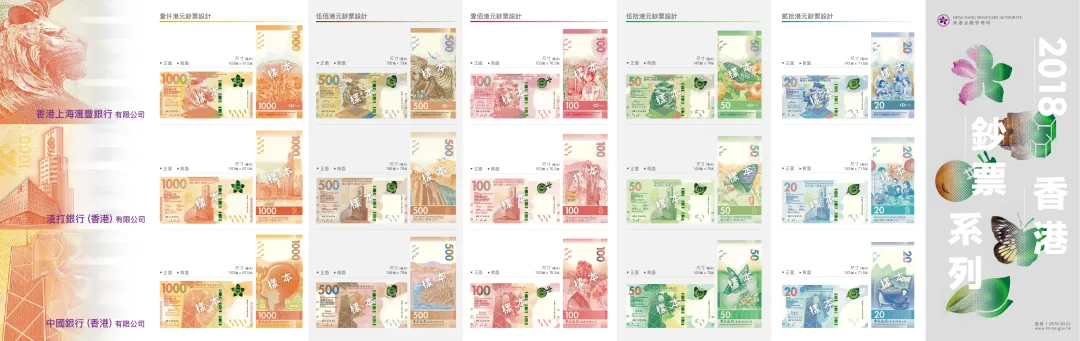
A bit of background: most Hong Kong dollar banknotes are issued by three commercial banks under the supervision of the Hong Kong Monetary Authority (HKMA). The three note-issuing banks are HSBC, Standard Chartered Bank, and Bank of China (Hong Kong). There is also a purple HKD 10 note issued directly by the HKMA. Coins are issued by the HKMA. The banknotes carry the phrase "promises to pay the bearer on demand" in both Chinese and English, because the three banks are authorized issuers, while the true right to issue Hong Kong dollars rests with the HKMA, a government agency. Therefore, the notes issued by the three banks are more like commercial paper or exchange certificates issued jointly by the three banks under government license, rather than legal tender in the strict sense.
When the HKD exchange rate breaks through 7.75, the strong-side conversion is triggered. The HKMA injects liquidity into the market by selling HKD and buying USD to stabilize the rate. Conversely, when the rate approaches 7.85, the weak-side conversion is triggered, and the HKMA reduces HKD liquidity by buying HKD and selling USD.
2. Reasons for HKD Hitting the Strong-Side Trigger
Capital Inflows and Increased Demand: When demand for HKD exceeds supply, the exchange rate strengthens. For example, in early May 2025, the HKD repeatedly triggered the strong-side conversion, mainly driven by risk-off sentiment that favored HKD assets. In addition, large net inflows of southbound capital and dividend payments by Hong Kong-listed companies boosted HKD demand.
After hitting the strong-side trigger recently, the HKMA injected liquidity by selling HKD and buying USD, causing the Hong Kong Interbank Offered Rate (Hibor) to decline.
Strong Stock Market Performance: The active performance of the Hong Kong stock market attracted significant capital inflows. In Q1 2025, the Hang Seng Index and the Hang Seng Tech Index rose over 10% and 14% respectively, with average daily turnover reaching HKD 250 billion. These factors collectively pushed the HKD exchange rate higher, triggering the strong-side conversion.
3. Reasons for HKD Approaching the Weak-Side Trigger
Capital Outflows and Carry Trades: When HKD liquidity is excessive, the exchange rate weakens. Starting May 5, 2025, the HKD rapidly weakened, approaching the weak-side conversion level. This was mainly due to the HKMA's earlier massive liquidity injections, which widened the interest rate differential between HKD and USD, attracting carry trades. Carry traders borrowed HKD, converted to USD, and lent out USD, reducing demand for HKD and weakening the exchange rate.
Market Expectations and Confidence Shifts: Market expectations for future economic growth and speculation about interest rate policies also contributed to the HKD's depreciation. For instance, the market widely expected the Fed to continue raising rates, while Hong Kong rates might not follow suit, making investors more inclined to hold USD rather than HKD.
4. Relationship Between Hong Kong IPOs and HKD Exchange Rate
IPO Demand for HKD: IPO activity in Hong Kong increases demand for HKD. For example, in Q1 2025, Hong Kong's new share fundraising totaled over HKD 60 billion, up more than six times year-on-year. These capital inflows not only supported the HKD exchange rate but also boosted confidence in HKD assets.
Exchange Rate Impact on IPOs: Fluctuations in the HKD exchange rate can also affect the performance of Hong Kong IPOs. When the HKD is stable and market confidence is high, IPO activity tends to be more vibrant. For instance, the Hong Kong IPO market recovered in 2024, driven by a number of mainland leading enterprises listing in Hong Kong. However, when the HKD is volatile, companies may delay listing plans to avoid exchange rate risk.
5. Future Outlook
The volatility of the HKD exchange rate is not an isolated event but a complex phenomenon closely related to the global economic environment and market confidence. Whether it is the implementation of the strong-side conversion or the subsequent approach to the weak-side conversion, these are important measures taken by the HKMA in response to market challenges. Going forward, the HKD's trajectory will be influenced by multiple factors, including changes in the global economic landscape, the direction of US interest rate policy, and the performance of Hong Kong's local economy. Investors need to closely monitor these factors to make informed decisions in a volatile market.
After hitting the strong-side trigger, Hibor continued to decline rapidly, and the HKD depreciated quickly, approaching the weak-side trigger. This actually proves that the funds that came in due to strong HKD demand were not effectively absorbed. The interbank balance rose sharply. As reservoirs for HKD, the property and stock markets would need to absorb these funds, but relying on Hong Kong's property market is clearly unrealistic. So we turn our attention to the Hong Kong stock market.
If risk appetite rises, attracting HKD funds into the stock market, the current declining turnover needs to reverse. If this does not happen, once HKD liquidity tightens, Hibor rises again, and the interbank balance declines, against a backdrop of shrinking Hong Kong stock turnover, it could trigger a correction in Hong Kong stocks, forming a negative feedback loop that suppresses the market.
In addition, attention should be paid to whether southbound capital will continue to flow into Hong Kong stocks, and another key indicator, the AH premium index, is also approaching historical extremes.
In summary, the stability of the HKD exchange rate is crucial to the healthy development of Hong Kong's financial market. Through the effective operation of the linked exchange rate system, the HKMA ensures the stability of the HKD exchange rate, while also providing strong support for the continued prosperity of the Hong Kong stock market.

专注投资分析、市场洞察与资产配置。不追短期波动,只理解真正驱动长期回报的东西。