In January 2026, global capital markets are witnessing an unprecedented industrial integration. Elon Musk's three core pillars—Tesla, SpaceX, and xAI—are evolving from loose equity ties into a highly integrated capital闭环 through legal entities like K2 Merger Sub. By leveraging SpaceX's launch cost advantages, xAI's algorithmic advances, and Tesla's hardware mass-production capabilities, Musk aims to build a super-industrial entity free from terrestrial energy constraints and regulatory shackles. However, on the path to a $1.5 trillion IPO, this empire must navigate fiduciary duty challenges, security reviews, and export controls.
1. Capital Restructuring's Legal Vanguard: K2 Entities and Merger Architecture
On January 21, 2026, Nevada state records showed the approval of entities named "K2 Merger Sub Inc." and "K2 Merger Sub 2 LLC." The presence of SpaceX CFO Bret Johnsen on the management list signals that the integration of Musk's industrial empire has entered a substantive legal phase.
1.1 Structured Application of Reverse Triangular Merger
In M&A practice, the creation of a Merger Sub typically points to a Reverse Triangular Merger. This structure allows the acquirer (or a new holding company) to effect equity changes while preserving the target's legal entity status, minimizing contract assignment costs and optimizing tax treatment. If SpaceX uses this path to absorb xAI or part of Tesla's equity, the goal is not just asset scale expansion but also to form a unified valuation logic ahead of an IPO.
1.2 Internal Capital Allocation Loop
The current "Musk inner loop" manifests as a cross-entity capital allocation strategy. In January 2026, Tesla injected $2 billion into xAI, while SpaceX had previously contributed an equal amount in xAI's Series E round.
Table 1: Cross-Entity Capital Flows and Strategic Objectives Matrix
| Path | Core Transaction | Capital Scale | Strategic Rationale |
|---|---|---|---|
| xAI → Tesla | Grok model & cloud compute licensing | Long-term service agreement | Supports FSD v14 and Optimus cognitive layer development |
| Tesla → SpaceX | AI5 custom chips & Megapack energy systems | Hardware procurement contract | Builds underlying hardware for orbital data centers |
| SpaceX → Tesla | global communications integration | Subscription & hardware integration fees | Eliminates latency bottlenecks for remote Robotaxi intervention |
| Capital Return | Equity swaps & balance sheet consolidation | Valuation premium allocation | Supports Musk's $8.5 trillion market cap target |
2. Physical AI Strategy: Tesla's Shift from Automaker to AI Platform
Tesla's 2025 financials reflect a paradigm shift in its core business. While vehicle deliveries face global demand fluctuations, energy deployment and AI service revenue shares have risen significantly.
2.1 TeraFab: Chip Sovereignty Through In-House Fabrication
At the 2026 Davos Forum, Musk emphasized that Tesla must build a giant chip factory called "TeraFab" to address severe advanced compute bottlenecks. The core logic is extreme vertical integration: by completing logic circuit design, memory stacking, and advanced packaging within the same facility, Tesla aims to reduce the per-chip cost of AI5 to 10% of Nvidia's comparable products.
Table 2: Tesla Custom Chip Technology Evolution and Scale Estimates
| Chip Generation | Estimated Production | Core Process Target | Estimated Annual Wafer Starts | Strategic Application |
|---|---|---|---|---|
| AI4 (HW4) | 2023-2026 | Mature node optimization | 50,000/month | Current fleet & early Cybercab |
| AI5 | 2026-2027 | 2nm / High-NA | 100,000/month | Optimus mass production & orbital inference cluster |
| AI6 / AI7 | 2028+ | Sub-2nm exploration | 200,000+/month | AGI edge nodes |
2.2 From Hardware Sales to "Compute Discounting"
Tesla's long-term valuation no longer rests on gross margin per vehicle but on the real-time data and redundant compute generated by the physical terminals it manages. Through FSD v14's end-to-end neural network, Tesla's image data processing volume per second now exceeds most traditional internet giants. The merged entity will use this data to train higher-order physical models, feeding back into SpaceX's precision operations and xAI's logical reasoning.
3. Orbital Data Centers: The Thermodynamic Advantage of the Space Economy
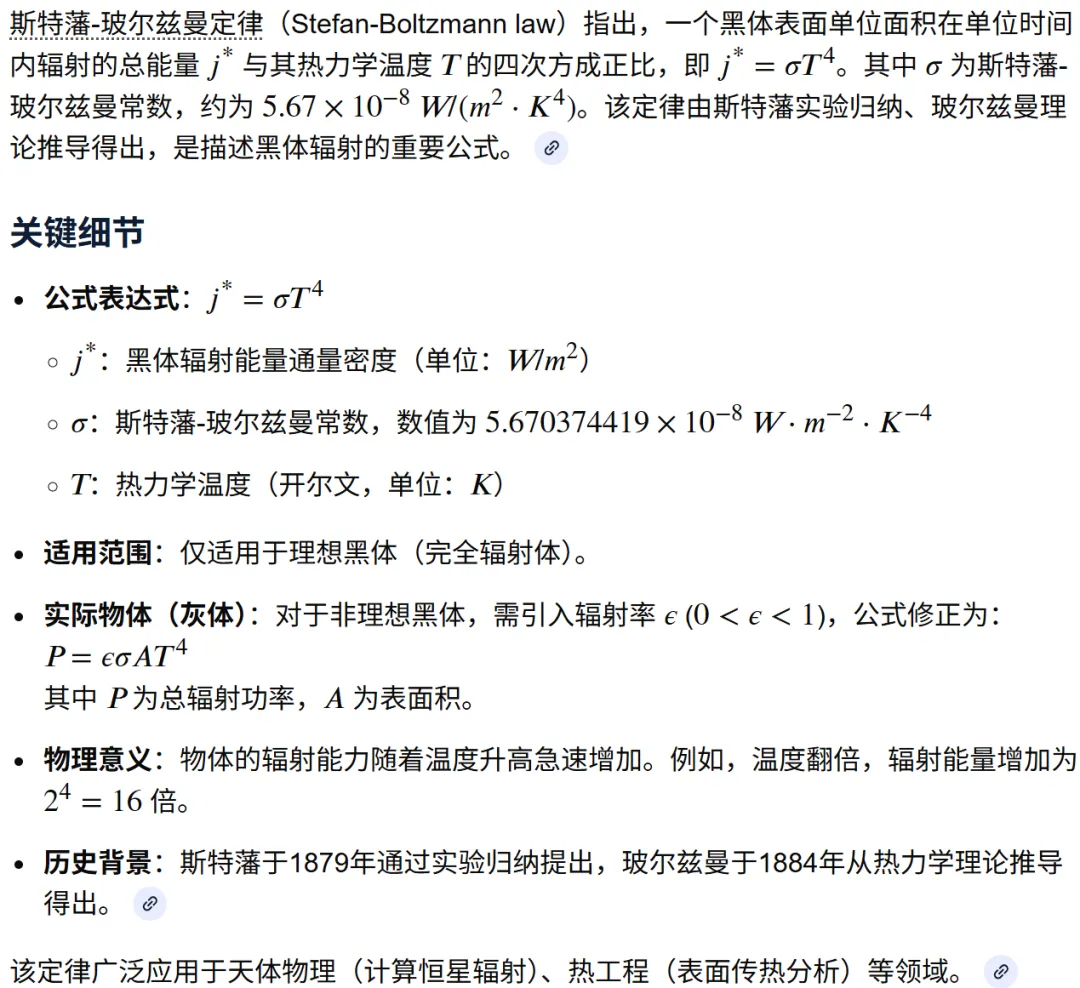
Musk's vision for SpaceX is shifting from launch provider to orbital utility. This transformation hinges on solving terrestrial AI infrastructure's power and cooling limits. According to the second law of thermodynamics, data center energy efficiency on Earth is severely constrained by atmospheric conditions and water resources. In low Earth orbit, solar panels achieve energy density of 1361 W/m², about 8 times more efficient than on the ground. Although conductive cooling is absent, the deep-space background temperature approaches absolute zero. Using the Stefan-Boltzmann law (see below), high-performance thermal management systems can achieve massive heat rejection via efficient radiator panels, bypassing terrestrial water consumption.
In the competitive landscape, SpaceX is not alone. Blue Origin and Nvidia-backed Starcloud are accelerating orbital compute prototypes. Among current mainstream projects, Starlink-AI uses Tesla's AI5 chips with closed-loop liquid cooling, planning initial tests in Q2 2026. In contrast, other competitors like Google's Project Suncatcher or various national space cloud initiatives remain at experimental or first-flight stages. These efforts reflect a consensus that AI infrastructure is no longer confined to Earth but extends into space for more sustainable energy and cooling.
4. Corporate Governance and Legal Games: The Institutional Design Behind the Great Exit
In 2026, Musk successfully executed the so-called "DExit" (Delaware exit), moving Tesla's and SpaceX's legal headquarters to Texas. This shift is not merely administrative but a deep challenge to U.S. corporate law.
4.1 Texas Business Court's "Regulatory Constraint"
Texas's newly established business court and TXSE (Texas Stock Exchange) aim to provide a "management-friendly" legal environment. Unlike Delaware's Court of Chancery, which rigorously scrutinizes controlling shareholders and their compensation, Texas courts tend to apply a broad interpretation of the Business Judgment Rule.
4.2 Compensation Plan Revival and Fiduciary Duty Redefinition
In late 2025, a Texas court effectively reinstated Musk's previously voided $100 billion compensation package. This decision signals judicial recognition of the "star CEO's" central role in value creation. However, it also heightens minority shareholder concerns about related-party transaction transparency. Asset pricing in the merger, particularly Tesla's capital injection into xAI, still faces potential breach-of-fiduciary-duty lawsuits, though SB 29 has raised the filing threshold to 3% ownership.
5. Regulatory Fog: Systemic Risks of Security Reviews and Export Controls
If the merger completes, the resulting entity will be the U.S. private company most deeply intertwined with national defense interests while having the broadest global operational footprint. This unique structure invites unprecedented national security scrutiny. Regulators are highly sensitive to businesses involving technology, infrastructure, and data. SpaceX, as the sole carrier of the Department of Defense's Starshield program, handles numerous military missions. Meanwhile, Tesla's reliance on overseas production bases and supply chains is deeply embedded in its global margin model. The merged entity will face intense scrutiny over how to physically separate sensitive space technology from its vast global manufacturing footprint.
Additionally, the International Traffic in Arms Regulations (ITAR) tightly control space systems and related technical data. If Tesla and SpaceX share the underlying autonomous driving codebase developed by xAI, cross-border R&D collaboration on that software could be deemed a technology export. Tesla's global engineering teams include many non-U.S. experts, conflicting with SpaceX's strict access requirements. Furthermore, Musk's role in the Department of Government Efficiency has sparked discussions about regulatory capture. The department's actions in terminating federal contracts are seen by some observers as potentially opening opportunities for Musk's entities to fill procurement gaps, constituting a conflict of interest.
6. Financial Valuation and IPO Outlook: The $1.5 Trillion Test
SpaceX's planned IPO in mid-June 2026 is a major test of the "Musk premium." Wall Street banks evaluating this super-conglomerate have turned to more aggressive sum-of-the-parts valuations. Estimates suggest Starlink, with its growing global subscriber base, could contribute ~$800 billion in valuation. Launch services, leveraging sovereign monopoly status, are valued at ~$300 billion. Tesla's AI and energy segments, through a software licensing model shift, are estimated at $400 billion. Combined with xAI and orbital compute node scarcity premiums, the merged entity's IPO target, after discounts, points to $1.5 trillion.
This cross-balance-sheet linkage is key to sustaining massive projects. Although SpaceX is profitable, Starship and lunar base construction costs exceed $10 billion annually. IPO proceeds are critical to avoiding a liquidity crisis. Tesla's TeraFab investment also requires SpaceX's post-IPO high valuation equity as collateral for low-cost debt financing. This illustrates how Musk leverages deep capital integration to support his grand vision. June 28, 2026—Musk's 55th birthday—will be the key date to observe whether this hegemonic闭环 is completed.
7. Conclusion: The Ultimate Operating System for the Physical World
The 2026 integration wave marks Musk's shift from single technology breakthroughs to building a self-sufficient industrial ecosystem through capital restructuring, judicial migration, and regulatory intervention. For professional investors, buying a share is not just equity but a call option on Musk's dominance in physical AI. In this paradigm, compute no longer resides solely in server racks but is physically distributed via orbital solar panels and terrestrial autonomous terminals. The empire's success will rewrite the global industrial competitive landscape, while any single entity's technical failure could trigger a financial resonance across the entire empire through cross-default clauses.


专注投资分析、市场洞察与资产配置。不追短期波动,只理解真正驱动长期回报的东西。